US data brokers are selling half a billion dollars in RL training environments to Chinese AI labs
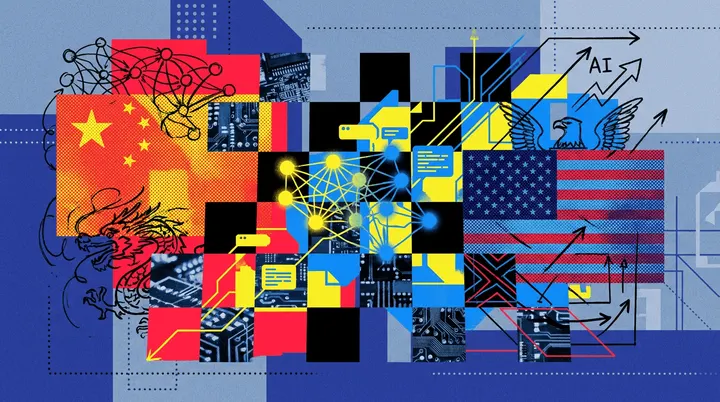
US data brokers like Mercor, Surge AI, and AfterQuery are selling roughly half a billion dollars' worth of AI training data to Chinese labs, according to a ChinaTalk investigation. That includes the same RL environments previously built for OpenAI or Anthropic. At least nine firms are involved, and export controls barely apply. The article US data brokers are selling half a billion dollars in RL training…
US data brokers are selling half a billion dollars in RL training environments to Chinese AI labs
Key Points
- At least nine US firms are selling $500 million worth of AI training data to Chinese labs, according to a ChinaTalk investigation.
- Chinese buyers use the same training environments built for OpenAI or Anthropic, cutting their own compute costs and development time.
- Because this data trade remains largely unregulated, the authors call for export controls over potential security risks in areas like cybersecurity and biology.
American data brokers sell so-called RL environments to Chinese AI labs, helping them save compute during model development. A ChinaTalk investigation identifies at least nine companies involved.
American data firms like Mercor, Surge AI, AfterQuery, and Turing are selling roughly half a billion dollars' worth of training data to Chinese AI labs, according to an investigation by ChinaTalk. Some of that data takes the form of reinforcement learning environments, which are simulated worlds where AI models are trained on specific tasks like coding, financial analysis, or office work.
Chinese labs deliberately buy the same products previously sold to Anthropic or OpenAI, the report says. That way, they already know the data works and can skip costly in-house development and wasted training runs. Because Chinese chips suffer from acute memory bottlenecks, those savings are particularly valuable for labs there.
There is also the issue of distillation. Chinese labs use powerful US models like GPT or Claude as "teachers," using their outputs as training examples. Combined with purchased RL environments, this creates a two-pronged advantage that lets Chinese labs close the gap with less compute of their own.
At least nine firms identified
The authors identified at least nine US data firms selling to Chinese customers. AfterQuery reportedly draws a significant share of its annual recurring revenue from Chinese customers. ChinaTalk points to Forbes reports of about $100 million in ARR but could not independently verify the sales.
Surge AI openly advertises on its website that its products are "built by the same experts behind our frontier-lab work." The deals also run through offshore structures. ByteDance maintains procurement offices in Singapore and San Jose.
These business relationships came to light through a combination of anonymous sources and sloppy operational security among subcontractors, according to ChinaTalk. The US data firms outsource much of the actual RL environment creation and data curation to low-paid workers in developing countries, especially India. Those subcontractors then sometimes post client names on LinkedIn or in résumés, even though they are supposed to use only code names. Export controls barely apply because RL environments remain largely unregulated.
Coding and biology raise dual-use concerns
Domains with dual-use potential pose particular risks: Coding environments improve software development but can also sharpen offensive cyber capabilities. Biology environments could improve gene synthesis capabilities and potentially enhance bioweapons-relevant applications. The ChinaTalk authors argue that the Bureau of Industry and Security should subject these dual-use environments to existing export controls.
At the same time, the authors stress that these relationships are not apocalyptic. By piggybacking on US work, Chinese labs still trail their US peers by at least a few months as a structural matter. Sensitive environments in areas like biology, chemistry, cybersecurity, chip design, and investment banking are increasingly being built in-house at American frontier companies, the authors say.
AI News Without the Hype – Curated by Humans
Subscribe to THE DECODER for ad-free reading, a weekly AI newsletter, our exclusive "AI Radar" frontier report six times a year, full archive access, and access to our comment section.
Subscribe now