DEEPX AI chip runs so cool that a butter heatsink doesn’t melt
Processors generating excess heat play a significant part in contemporary data center design, cost, and resource use. However, things could be vastly different if AI chips were more efficient and ran far cooler. South Korean chip startup DEEPX, recently featured by CNBC , thinks its AI chip designs are the answer. DEEPX demonstrated its DX-M1 processor’s cool-running capabilities in a bizarre new dairy-based thermal…
DEEPX AI chip runs so cool that a butter heatsink doesn’t melt — the DX-M1 processor impresses in a bizarre new dairy-based benchmark
South Korean chip startup DEEPX says its new AI chip will be at the heart of upcoming Hyundai robots.
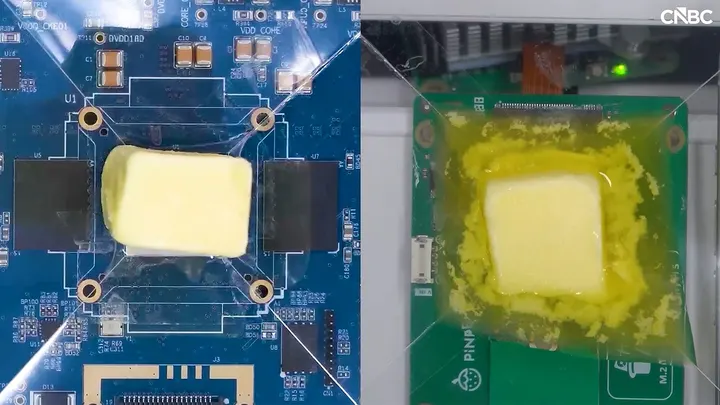
Processors generating excess heat play a significant part in contemporary data center design, cost, and resource use. However, things could be vastly different if AI chips were more efficient and ran far cooler. South Korean chip startup DEEPX, recently featured by CNBC, thinks its AI chip designs are the answer. DEEPX demonstrated its DX-M1 processor’s cool-running capabilities in a bizarre new dairy-based thermal benchmark. While rival chips caused a knob of butter to sizzle in seconds, atop the DEEPX solution, the butter block remains solid.
Concerns over AI data center proliferation are growing worldwide. These developments are shaping business, the environment, and politics. Some people have very strong feelings about them, and hundreds of people have risked and been thrown into jail protesting about data centers. The CNBC report linked in the intro looks into why modern data centers are problematic, and indicates that the core issues stem from the use of hot-running processors and the extensive power and cooling apparatus they need.
DEEPX says its simple answer is to “make the AI chips themselves run cooler.” The CNBC video includes a demo of the ultra-low-power DX-M1 processor. In a side-by-side test against unnamed rival AI chips, you can see the DX-M1 NPU is clearly cooler. DEEPX CEO Kim Nok-won claims a temperature difference of 25 to more than 40 degrees Celsius compared with competitors. Kim said the side-by-side chips processed “the same AI workload… and every chip melted the butter except the last chip [DX-M1].”
The dairy-based thermal challenge is certainly eyebrow-raising, but we note some big gaps in the comparison information. Most notable was the question of how fast each processor tackles the test workload. Anyone can run a chip cool if the power and clocks are scaled back. PC enthusiasts undervolt and/or underclock their GPUs all the time for efficiency, better thermals, and reduced fan noise).
DEEPX’s DX-M1 NPU has been produced on Samsung 5nm since August 2025, according to The Elec reports. It has won approximately $13.3M worth of orders thanks to this sliver of silicon. The company is planning to move forward with the next-gen DX-M2 AI chip, which is based on Samsung 2nm, with its mass production aiming for H2 2027.
In conclusion, these NPUs look set for edge computing and robotics applications, so they aren’t really competing in the same space as the racks of power-gulping Nvidia Blackwell and Ruben GPUs featured in the CNBC news feature. Eventually, we might see the hundreds or thousands of hot-running Nvidia GPUs with beefy liquid cooling apparatus get replaced by cooler-running custom accelerators. Such an innovation could cool the backlash against AI data centers. However, DEEPX’s DX-M1 or even DX-M2 chips aren’t going to compete in that space, so this butter test is a bit of a red herring.
The CNBC report also highlights SK hynix’s work on iHBM, a next-gen low-power consumption, and cool-running. The ‘i’ stands for ‘Integrated Cooling Element’ according to an exec talking to CNBC. CoolIT is also trying a similar approach by bringing water cooling even closer to the heat-generating silicon.
Get Tom's Hardware's best news and in-depth reviews, straight to your inbox.
Follow Tom's Hardware on Google News, or add us as a preferred source, to get our latest news, analysis, & reviews in your feeds.
Mark Tyson is a news editor at Tom's Hardware. He enjoys covering the full breadth of PC tech; from business and semiconductor design to products approaching the edge of reason.