Congresswoman calls for artificial superintelligence ban after Democrats' seismic midterm sweep
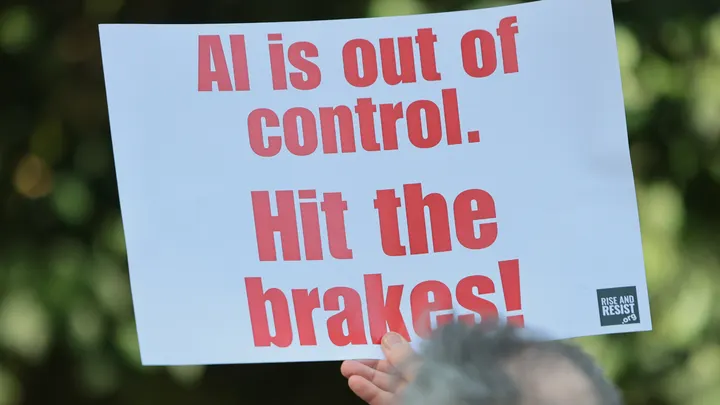
Just one day after the Democrats swept the U.S. midterm elections, Congresswoman Yassamin Ansari (D-Ariz.) called for an agenda to pause advanced AI development. The Arizona representative said on X that the “out of control” industry needs to be regulated, and she even went as far as calling for the ban of artificial superintelligence. Many issues about AI data centers also went on the ballot during the November 3…
Congresswoman calls for artificial superintelligence ban after Democrats' seismic midterm sweep — demands regulation of 'out of control' industry and pause on advanced AI
The announcement follows Democrats taking both the House and Senate from the GOP during the U.S. midterms.
Just one day after the Democrats swept the U.S. midterm elections, Congresswoman Yassamin Ansari (D-Ariz.) called for an agenda to pause advanced AI development. The Arizona representative said on X that the “out of control” industry needs to be regulated, and she even went as far as calling for the ban of artificial superintelligence. Many issues about AI data centers also went on the ballot during the November 3 election, with the majority of Americans voting against them. However, it should be noted that the backlash that AI data centers are facing are driven by concerns about utility hikes, noise pollution, and other impacts of power-hungry campuses, not just artificial intelligence in general.
Rep. Ansari was elected to the House in 2025, representing Arizona’s third congressional district. She’s also a member of the House Oversight Subcommittee on Cybersecurity, Information Technology, and Government Innovation, as well as the Subcommittee on Economic Growth, Energy Policy, and Regulatory Affairs. While she doesn’t have a subcommittee or committee leadership position yet, these subcommittee memberships should give her some avenues to influence the U.S. Congress’ response to the White House’s AI policies, especially now that her party holds the majority in both the House and Senate.
The calls to regulate artificial intelligence aren’t new, with Senator Bernie Sanders (I-Vt.) calling for various actions against the tech companies focusing on artificial intelligence since last year. The independent senator has initially called for a halt on AI data center construction to ensure that the technology benefits “all of us, not just the 1%,” which followed up about half a year later with a bill that proposes 50% public ownership of U.S. AI firms and a $ 1,000 dividend for every American. He also proposed a 20-year prison sentence for anyone who develops artificial superintelligence, putting it nearly on par with the unauthorized development of nuclear weapons. Other Senate leaders are also confronting Big Tech companies and accusing them of misleading the public when it comes to the benefits that AI delivers to the communities they’re in.
However, these moves go against President Donald Trump’s artificial intelligence agenda, which the administration sees as a race against China. He recently sat down with some of the top executives of the biggest AI companies for lunch at White House, where they promised to “self-police” AI development after news that OpenAI’s and Anthropic’s LLMs have been wreaking havoc on the internet. It was also after this moment that Trump decided that AI is suffering from a branding problem and renamed the technology “Super Intelligence.” Some comments on her X post also showed resistance to her call — a user claiming to have stage 4 terminal lung cancer asked her to reconsider, saying that AI-powered medical research could save his life, while Elon Musk shared her post and wrote: “It’s a Brave New World.”
Nevertheless, the White House also acknowledged the unpopularity of AI data centers and took steps to reduce their impact on the electricity costs for the average residential and commercial user by asking hyperscalers, utility providers, and even state governors to sign the “ratepayer protection pledge.” Trump even went as far as mandating AI data centers to pay energy dividends to the local community, but it seems that his moves were deemed too little, too late by most voters.
Follow Tom's Hardware on Google News, or add us as a preferred source, to get our latest news, analysis, & reviews in your feeds.
Get Tom's Hardware's best news and in-depth reviews, straight to your inbox.
Jowi Morales is a tech enthusiast with years of experience working in the industry. He’s been writing with several tech publications since 2021, where he’s been interested in tech hardware and consumer electronics.