بررسی ابعاد مالی و استراتژیهای آنتروپیک در پرونده عرضه اولیه سهام
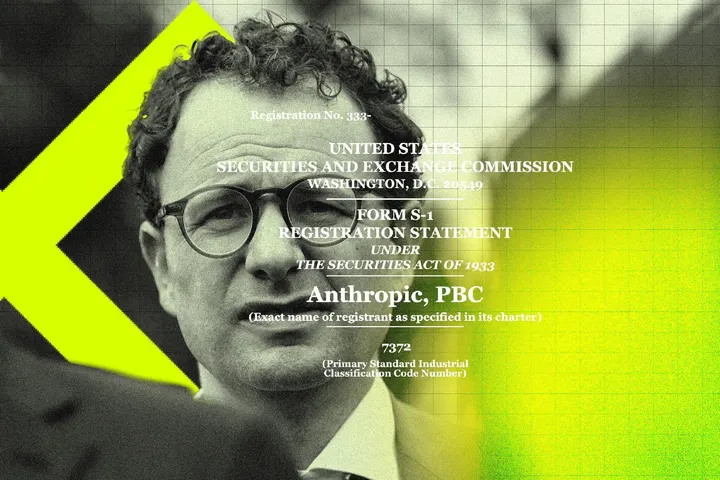
پرونده S-1 آنتروپیک برای ورود به بورس ناسداک جزئیات مالی و اقتصادی یک آزمایشگاه پیشرو هوش مصنوعی را نمایان کرده است. این شرکت با ارزشگذاری چند تریلیون دلاری به دنبال اثبات مدل کسبوکار خود و حرکت به سمت هوش مصنوعی عمومی است.
شرکت آنتروپیک با انتشار سند S-1 برای عرضه اولیه سهام خود در بورس ناسداک، گام بلندی برداشته است و ارزشگذاری آن ممکن است بین ۱.۵ تا ۲ تریلیون دلار تخمین زده شود. این سند صدها صفحهای، نگاهی دقیق به اقتصاد یک آزمایشگاه پیشرو هوش مصنوعی و هزینههای هنگفت توسعه این فناوری ارائه میدهد.
بررسیها نشان میدهد که حاشیههای سود و بازدهی مالی این شرکت در زمینه استنتاج بهطور چشمگیری بهبود یافته است؛ به طوری که حاشیه سود ناخالص آن از اعداد منفی در سالهای گذشته اکنون به ارقام مثبتی رسیده است. بخش عمدهای از درآمد این شرکت همچنان متمرکز بر حوزههای خاصی مانند کدنویسی است، اما برای رسیدن به اهداف درآمدی کلان، ورود به سایر حوزههای اداری و تخصصی ضروری خواهد بود.
مدیران آنتروپیک همچنان بر روی توسعه مدلهای پیشرفتهتر تمرکز دارند و بخش قابلتوجهی از توان پردازشی خود را به تحقیق و آموزش مدلهای نسل آینده اختصاص میدهند. این رویکرد بلندپروازانه، مشابه مدل رشد شرکتهای بزرگی نظیر آمازون است که سرمایهگذاریهای سنگین را بر سوددهی کوتاهمدت مقدم میدانند.
Anthropic is asking Wall Street to believe in AGI
Today on Decoder , I’m joined by Joey Brookhart, an analyst at the chip and AI research firm SemiAnalysis, to help me dig into the story inside the numbers of the Anthropic IPO filing — a document known as an S-1. Anthropic just filed its S-1 to go public on the Nasdaq, and it could start trading as soon as next month at a valuation of anywhere between $1.5 trillion and $2 trillion. That would immediately make it…
Today on Decoder , I’m joined by Joey Brookhart, an analyst at the chip and AI research firm SemiAnalysis, to help me dig into the story inside the numbers of the Anthropic IPO filing — a document known as an S-1. Anthropic just filed its S-1 to go public on the Nasdaq, and it could start trading as soon as next month at a valuation of anywhere between $1.5 trillion and $2 trillion. That would immediately make it one of the most valuable companies on the planet. But the price tag really isn’t the whole story here. The S-1 document published earlier this week is hundreds upon hundreds of pages filled with details that finally paint a picture of the economics of a frontier AI lab. As you might imagine, that picture is both really complicated and built on a series of very, very ambitious assumptions about the future and what AI will do to it . So I wanted to have Joey on the show to help break down what this document tells us, both about Anthropic’s finances and the broader AI economy. Joey and his colleagues at SemiAnalysis actually built a model of Anthropic’s finances from the outside back in July, so he’s been waiting for this filing about as eagerly as anyone, and I was excited to hear his take on what we’ve learned and, importantly, what we still don’t know. Okay: SemiAnalysis’ Joey Brookhart on the Anthropic S-1 and the costs and risks of building frontier AI. Here we go. This interview has been lightly edited for length and clarity. Joey Brookhart, you are an analyst at SemiAnalysis. You’re also co-lead on SemiAnalysis’ Tokenomics model, which is going to come up a lot in this episode. Welcome to Decoder . Yeah, thanks so much, Nilay. I am very excited to talk to you. We’re talking just a couple days after the big Anthropic S-1 was filed. It’s our first look inside of the finances of one of the leading frontier models. What’s your take? What’s your read into it? It was an awesome S-1. It’s been a rough three weeks since the investor day. Some people were somewhat disappointed in the September [annualized recurring revenue] numbers, but what we saw here was a company that has efficiently scaled to an amazing level, with a $1 trillion-plus valuation, $70 billion-plus of ARR in a very short amount of time. In gross margins, compute margins, and free cash flow, everything is what you’d want to see. So I don’t think there was much to nitpick in this filing. It’s the reason you’ve seen a lot of the semiconductor complex, and the neoclouds and compute stocks, really rally again in the last two days. It’s funny, I don’t think I can nitpick the S-1 itself. I want to get into some of the details because there are a lot of numbers in there that are worth thinking about. I actually just want to start at the really big picture. You run a thing called Tokenomics. I’m going to explain what Tokenomics is to people. I look at Anthropic and where it could go. I look at Dario Amodei saying that he can see his way to $1 trillion in revenue. Where does that money come from? Because so much of these businesses are about eating every other business and it feels like someone else has to make some money to pay Anthropic to generate these revenues. I haven’t actually seen that laid out very clearly. Verge subscribers, don’t forget you get exclusive access to ad-free Decoder wherever you get your podcasts. Head here . Not a subscriber? You can sign up here . It’s so interesting. Today, because even the scale we’re at is $120 billion of ARR between the two leading labs, it’s still an extremely narrow market. The top 1 percent of customers are the ones that are spending $50,000 to $100,000 per employee. Your broader Fortune 500 or Global 2000, which typically do a lot of IT spend, isn’t spending much. A lot of the spending, especially at Anthropic, is coding-specific. It’s almost a single vertical company. We look in the future to 2027, you think to this broader adoption and white collar work. This typical enterprise Q4 budgeting season, we actually haven’t gone through with one of these labs yet in any meaningful way because their ARR did really start to accelerate until the beginning of the year. We think of other cases like cyber, which can be similar to coding, where these are eight-figure-plus contracts with leading enterprises that can scale very quickly due to all the cybersecurity incidents we’re seeing. You get to other verticals like bio. To get to $1 trillion, we do have to move to some of that white collar work, where it goes from AI augmentation to labor saving or replacement in some areas. You look at things like Microsoft’s buyout offers to employees as an example of this , but there’s no wealth of other verticals that they can get into and really start to move the needle. This is the single biggest question I have, not just about the S-1, but the entire industry. I would understand that if there are one or two leading labs. There are two big companies that have a technology that can automate a whole bunch of things. We will see how well that automation goes sector by sector, but there are not just two leading labs. There are quite a few of them. There are open weight models. I’ve heard from a lot of CEOs who are very nervous about giving all their data to an OpenAI or Anthropic and they would like to run some things on-prem. There are law firms running on-prem AI now, which is the funniest turn in maybe all of history. How do you see that playing out? Because so much of the pressure on this S-1 was the numbers themselves, which I want to talk about, but then there’s the external pressure of, “You’ve got to grow and growth is not as short.” So how do you see all of that playing out? It’s very interesting because when we look at coding today, for example — and I think we saw this in Q3 with OpenAI kind of catching up — there are areas of coding where there are very low switching costs, and I can just move between that. What we hear from enterprises and maybe, too, on the OpenAI side — obviously I think they somewhat botched the Fable release, and the lack of zero data retention is why we saw some of the slowdown. That’s something they can fix with Fable 5.5 and maybe drive more enterprise adoption there. That’s a huge thing for enterprises when we talk with them. We definitely see enterprises now, and more so, too, a lot of the AI natives, doing custom training and post-training on open weight models, and then running either their inference off of that or even their products for internal or external use cases. Obviously, DeepMind at Google and [Meta Superintelligence Labs] are very well-funded labs that have pretty similar training compute capacity, and they’re bringing on a ton of it. Not even to mention SpaceX as well, with what Elon said on [about] 10 net new gigawatts next year and half of that is the long-term internal use case. In the first half of the year, Anthropic ran away with it. They were 90 percent of the industry’s net new ARR. We saw in Q3 that OpenAI was probably actually the majority of industry net new ARR. Open-source has grown from probably $1 billion of token inference costs, ARR, in Q1 to $10 billion-plus here in Q3. So yes, the industry’s gotten much more competitive, but there are all these new use cases, too, and some of these verticalized use cases are really where we’re going to see the growth going forward. Because it’s obvious coding isn’t going to power us to even triple from here. It’s interesting. The concept is called Tokenomics. You run that practice alongside another co-lead at SemiAnalysis. Explain what it is because to me it’s such a smart way of thinking about, “We’re going to put some money in and maybe we’ll get some money out.” I think of it as the unit economics [of AI], or even just the broader idea — everything from a macro- to microeconomics of running an AI business or even looking at AI demand. So we cover the hyperscalers, now some of the neoclouds as well in a separate product. But then just the AI labs, too. For investors, or just people that are interested in the business, Anthropic had negative 94 percent gross margins on inference two years ago. Now they have a positive 85 percent margin, and people don’t understand how they allocate compute. How do we think about the inference business model? Part of that gross margin conversation is the revenue per megawatt in inference. Why are all companies that are running inference seeing massive gains in inference and compute efficiency? So we try to model out these businesses and obviously when Anthropic was private, we’re dealing with information we can get from the press and things like that. But now that we have concrete audited numbers, it’s easy to explain the unit economics of this. And also how the businesses differ. OpenAI is a much different business than Anthropic just in both their consumption versus subscription and then historical weight versus consumer versus enterprise. [We are] trying to understand across the demand level the economics of these businesses. Several years ago when I talked to Google CEO Sundar Pichai about the cost of inference, I said, “How are you ever going to make money?” He was just very clear. He said, “If there’s one thing Google’s good at, it’s bringing this stuff down the cost curve.” It was a very blunt answer. I understand how Google can do it. They make their own chips. Anthropic is running on everyone else’s clouds. The core part of the S-1 is how much they’ve committed to spend on other people’s clouds: SpaceXAI, Google, Amazon. Where does their efficiency come from? There’s really token throughput. They have a very diverse chip fleet. Between Trainiums, TPUs, and GPUs, across all of those, we see a ton of token efficiencies. Token throughput, for example, on Trainium chips is up 5x to 10x year-over-year right now. Dealing with both the hardware level efficiencies and the software — and how the model interacts with the hardware — there are a lot of token throughput gains where if you’re doing X tokens per second, now you’re doing five or 10 times that just a year later. What they’ll tell you is they see continued compute efficiencies as well going forward. Max Kan, who co-leads Tokenomics model with me at SemiAnalysis, and I have even published some research on this. Right now, if Anthropic’s at $65 million of revenue per inference megawatt, this was mid-teens last year at this time. What we’ve said on maybe Opus 5.5 on a [Nvidia] Blackwell, you can get to $100 to $120 million of revenue per megawatt. The big thing here is they’re paying on average now just a little over $10 million per megawatt in [cost of goods sold], or just in compute costs. What you can do with those margins is then reinvest in training. People don’t realize this, but only about 30 percent of the compute is actually in inference-serving revenue. The rest is for experimentation and research, training models, and post-training models. So there’s a lot of compute that is building the next model and that’s more of the R&D side and where you actually get your returns and defensibility in this business. Actually, what I was expecting to see in the S-1 was that dynamic play out much more strongly — that Anthropic makes a bunch of money selling the models they have now and there are more customers in the future for the models they have now. That’s going to throw off a whole bunch of margin. And then, because it is Anthropic and they think they’re building a digital god, they’re going to train the next models as much as they can. That is a very particular Anthropic story. The company is chasing AGI. The people who work there will happily tell you that in the S-1 that Claude might be conscious and this could all go to hell. Anthropic is a very unique company in its conception of itself. But you don’t really see that dynamic playing out in the S-1. They’re managing their training costs against their inference margin pretty well. Do you see that going up or changing in any way? I agree. Long term, and we’ve even said this internally, they want to actually increase the percentage of training. If you believe you’re building a digital god or going towards AGI, and as long as you have the gross margins of 85 percent-plus on inference to do so, you can. They’ve grown a lot faster than they thought, and they didn’t expect to be at 11 percent non-gap EBITA margins. They’d love to be closer to zero, or even below that if they could get that compute and allocate it towards training and continue to see these compute efficiencies. They’ve messaged that, too, to investors in the roadshow. You can look at this S-1 and just the curve of profitability over the last few years and how little cash they burned to get to this point and you can say, “This is a good business model, but we’re going towards AGI. Don’t expect the margin leverage we’re seeing to continue to this level, even though long-term margins can be quite a bit higher.” There are some real shades of Amazon there. Jeff Bezos famously told investors he wasn’t going to make money until he could make a lot of money. Obviously, Amazon and Anthropic have a lot of back and forth. Maybe there’s some family resemblance there. But I’m curious, there’s a point of model capability that would allow you to go into more verticals than just coding, right? We might be at it now. The idea of capability overhang exists, the idea that the models we have today could go and take over bio research. They’re taking over mathematics today. There’s a point at which the smartest business decision is to stop training and to just sell your profitable model into more and more companies. Anthropic as a public company will face that pressure. Do you think they’re organized or structured to fend it off? Yeah, I think they’re structured well. With some of the voting stock in areas like that, they definitely are. We’ve seen this in tech before and even publicly when Mark Zuckerberg has made these decisions before to invest heavily. It didn’t always pay off. I just want to point out, it didn’t always pay off. Yeah, it did not always pay off. Although you and I technically are in the metaverse right now, by some definition. [Laughs] Right. But I think that’s something, and there’s an interesting number in the S-1 that 80 percent of revenue in the last three months comes from models released in the last six months. So then you say, “Okay, 20 percent of the models are like Opus 4.5 in earlier versions.” One thing going forward is that if you’re a frontier model company, you always need to be at the frontier and it’s incredibly competitive. Wait, can I ask a really dumb question about that? Yeah. Why? I think the heart of my curiosity about the industry right now is if you enabled some bleeding-edge technology that could revolutionize the entire world, at some point, the most profitable thing to do is to just go play it out in all the different verticals, right? It’s not to go make the next one. It’s actually to run an efficient model in legal services and medicine and wherever else that there hasn’t been diffusion of AI yet. This idea that you always have to be at the frontier, that Anthropic always has to be competing with Google and OpenAI and whoever else, I get it from their self-conception. But from a business point of view, an AI-enabled business is going to throw out more money and spend more money with me, the AI provider, and that isn’t necessarily related to being at the frontier. There are a few portions of that. For new verticals, and this is very cyber specific, if an adversary is using a frontier model, you need to be defending with a frontier model. Fair enough. When we talk to some enterprises, it’s not like an email summary where I can run that on open source or Sonnet. There are just certain verticals where having… [For example,] if you were in a legal case as a defendant, would you be okay if your lawyer was using a non-frontier model if the prosecution— [Laughs] I got bad news for you about what’s going on in the legal market right now. The competitive dynamics do dictate that. I think from a go-forward perspective, we’ve seen this with open source too catching up in one point, but the demand will be there. [SemiAnalysis CEO] Dylan [Patel] says this a lot. The demand will always be there for frontier intelligence, especially in competitive industries. And there are certain tasks, as you go towards more labor replacement versus labor augmentation, where that also is the case. At the same time, they are getting more vertical. If you go look at job postings or what they’re hiring for, they’re putting out more of these SKUs and areas, and there’s a lot of beta testing going on like Claude for financial services, Claude for legal, their cyber program. They’re giving away 25,000 of credits per month for people in their cyber program. That’ll be a huge SKU for them in 2027. Those verticalized areas and then ones that are specifically where you need to be… It’s more adversarial, I should say, or competitive, are the main reasons why. But we can both agree there are areas like email summary and work that definitely doesn’t need to happen [at the frontier]. I’ll just make a dumb comparison to the iPhone. It’s iPhone season. I just reviewed the iPhone Duo. Apple kept the iPhone looking the same for several years now. They build all of the tooling for the new iPhone and then they just reuse it for two or three or four models to get all the value out of that investment back before they move on to the next thing. Apple puts out a new iPhone, and it keeps selling the old iPhone for a while to get more value out of that investment and that development program. The AI industry does not seem to be doing that. All of their emphasis is on developing the next new thing, deprecating the old thing pretty fast, and moving you onto the new expensive product, while at the same time they’re building the next new expensive product. At some point it feels like that will rationalize, that there will be something that is worth just collecting margin from while they go invest in the new thing. I just can’t figure out where Anthropic sits in that cycle. I mean, we do see this. Open source token volumes are picking up and there’s a lot of areas, yes, where the open source models have become good enough. I think on a go-forward basis, you’re like, “Okay, was that because of distillation?” And then the frontier labs have some defensibility actually going forward. I think when we talk to clients, it’s also about how we actually think about frontier versus open source. So something like a Sonnet type model, if you want to do the iPhone 18 versus the SE type analogy. We do see that dynamic, and obviously with open source, it’s a question of how much that can take. Two, because we’re so early in these verticals, we don’t know what’s going to be fully agentic. There’s no human in the loop where the harness actually has, I should say, some value and defensibility to it. The big area I’d look at here, especially when we talk to enterprises today, is only the coders are allowed to use the frontier models at a lot of these enterprises. If you’re a non-coder, some of these companies just limit you to Sonnet, if you’re an Anthropic customer. That’s reflective of how management views and wants to budget for this, what frontier intelligence is actually worth to them in certain areas. In my financial analyst brain, Claude could not build a good financial model six months ago. It’s getting better if you connect it to the right areas, but we’ve gone from something like, “I needed a junior analyst six months ago,” to, “Maybe I don’t as much anymore,” and then, “Will I have a full junior analyst at my disposal anytime or multiple pretty quickly, if I have unlimited token budget?” We just look at that across every vertical and major job category. The time horizon in each of those categories is going to be different. That’s just one of the bigger questions I have: How quickly do they get to where they think they can go? I want to dig in on some of the numbers here. The one that jumped out in all of the comment sections on all of the forums and all of our articles yesterday was $80 billion. Anthropic lost $80 billion [in the first half of 2026]. That is related to a technical charge. Can you just explain the $80 billion? Because it doesn’t seem particularly relevant to the revenue and profits they’re talking about. Yeah, it’s a non-cash charge because their valuation has gone up so much and they’ve issued warrants or convertible notes. You have to account for that in your balance sheet. It’s just a non-cash charge because their valuation has gone up so much since they issued these warrants and notes. That’s something you would always back out. You can argue on stuff like stock-based compensation. Should we really be thinking about that on a non-GAAP cash basis? Because it’s non-cash, if I just hand employees shares, I have to account for that on my income statement, but I’m not actually handing them pure cash out of my bank balance. So it’s not an area like that. It gets the accounting, the high level. If you don’t know accounting, it looks bad, but it’s because they’ve grown so much and their valuation has gone up so much. Some of the argument here about that charge is that Amazon was the other party there. Obviously Amazon’s very happy because Anthropic is buying a ton of AWS and sure they’re happy the valuation has gone up, but over time Amazon’s going to get diluted this way. That’s part of the dynamic there. Anthropic is going to obviously IPO. They’re going to put a bunch of shares in the market. It’s very clear that over time they will issue more shares to raise more money. It doesn’t seem like they’re going to stop wanting to raise money anytime soon. How are you thinking about that in terms of just investment into a company like Anthropic, that your valuation might be going up, but your actual ownership stake might be getting diluted over time? The deals have always been very creatively structured. The number is they’ve actually only burned $10 billion of cash. They have $120 billion-plus of cash and marketable securities in the balance sheet today, and post-IPO, probably another $100 billion. It’s a great deal for both parties. They only really rent compute. It’s not like they have these massive capital outlays or even rent-to-own. You can make some arguments about certain accounting and there are these massive compute commitment obligations and that’s technically future debt, or that is sitting somewhat off balance sheet essentially. But from a dilution perspective, all tech companies dilute. Are they going to need to raise another $100 billion of debt or equity at some point? Possibly. Can they continue to creatively structure and finance future compute buildouts? Probably as well. I know there’s been a lot of angst about the future of compute financing and data center financing in the last few weeks. But if you’re Anthropic, if you’re a major lab, a hyperscaler or Broadcom or Nvidia that are backstopping a lot of these deals, that’s probably not going to change anytime soon. So I’m not particularly worried. As an equity investor, would I be worried about getting super diluted? I don’t think so. If you believe in this long-term AGI bull case and that Anthropic is going to be a leader in this, that probably shouldn’t worry you. You’re probably looking at a $10 trillion-plus business. They can outrun dilution at that point. Let’s talk about the compute commitments. I saw at least one analysis saying over the next 10 years, it’s $800 billion-plus in commitments to the various hyperscalers and neoclouds. That’s a lot. You’re saying that they don’t have that much money. They haven’t even spent that much money yet. Do you see them generating the revenues to pay off those commitments? Yeah. I think when people look at the headline commitments, the $500 to $600 billion number over 7 to 10 years, let’s call it, what they’re paying for compute today actually isn’t that many gigawatts. If you think about their spending right now, on average they’re close to $11 million per megawatt in spend, or $11 billion per gigawatt. If you take that back to the annual level and say, “Okay, the $520 billion number is over 70 years, for example, that’s really not that many gigawatts and they’re going to be well beyond…” When they get to something like 20 gigawatts, the future compute commitments that they’re running essentially is going to be well into the trillions. So yes, they are going to have the revenue to do so. It’s more about how much revenue they are going to have relative to how much compute. Two, the compute efficiency equation. If they keep getting a lot more revenue out of every inference megawatt, how much do you really want to invest in training and take margins to zero from a rental perspective? Because you can get to something where even 80 percent to 85 percent of their fleet is just on training and research at these kinds of margins. The revenue is going to scale pretty well. They’re not in any dire situations there. Unless we realize all this revenue disappears or people churn. It’s not like they have to hit a trillion dollars of revenue extremely, extremely quickly to achieve all this and pay for this. Unless you’re trying to build digital God and unless it doesn’t diffuse across the economy as fast as everyone wants it to. Those are bets, right? They’re huge bets. The numbers you look at, if you’re really bullish on this ramp into the digital economy, is Anthropic saying within their Fortune 500 customers, they have 50 percent of the Fortune 500 and that is just 0.1 percent of their total customers’ operating expenses. When you look at that on a per user basis, it’s like $8 a month if you believe OpEx doesn’t include the cost of goods sold. If you believe they include the cost of goods sold, it’s sub-$50 per month. They said the same thing. Of the top 5 percent of Claude Code users, they’re spending $18,000 a year on average, the top 5 percent of users. Their non-Claude Code users spend under $75 a month, well under $75. There’s this huge opportunity, especially when we talk to enterprises and these traditional buyers of IT software. Penetration is extremely low in traditional white collar work. That’s the big point, too, that there is a large ramp period here of both seats adoption and usage. You can make arguments of who’s going to win in this, but it’s obvious the frontier labs are going to get some portion of this and it’s going to be pretty material to net new ARR next year. One of the things that’s really interesting about that is we talk about the frontier labs, we talk about the hyperscalers — Anthropic has a lot of wild risk factors in this S-1, including that Claude might be conscious and kill us all. But one of the most direct and maybe easiest to understand is that AWS, Azure, and Google Cloud are both suppliers and competitors in some real way, particularly Google. And they say, “These relationships could turn.” They have a big relationship with SpaceXAI. Elon Musk is going to train Grok. They’re going to compete with SpaceXAI at some point. That relationship might become precarious. As you say, they’re only renting their compute. At some point, the market might force them to own more of their compute because their own competitors don’t want to lease their capacity to the leading company. How do you see that playing out? We definitely see both OpenAI and Anthropic going more direct and not owning the compute, but more rent-to-own, or going through an SPV as some financial sponsors do and producing the compute more directly versus renting. There are two points to this. Google, from one perspective, is also selling its external chips to customers and saying, “We don’t care to monetize this within Google Cloud or even allocate the share… If you think we’re very chip-constrained, we don’t even care that these are going to DeepMind or internal GCP compute for us to monetize. We’re just willing to become a chip seller.” Anthropic loves TPUs and there are 3.5 to 4 gigawatts-plus, and probably more in the pipeline, in terms of orders there of Anthropic buying these chips directly to then rent. So yes, the market is good. Wait, it’s not buying them directly to rent. So they’re buying them into a neocloud? Yeah, they buy them through an SPV, or the SPV buys them and then they rent it from the SPV. Got it. Okay. Even within Google Cloud or AWS or Foundry, Anthropic is massive — 48 percent of their business comes through the Bedrock Foundry and Vertex where people are paying through their existing cloud relationship to access these models. They’re not even talking to Anthropic. You don’t have to interact with the Anthropic sales force. You mentioned this earlier. This marketing channel where Anthropic gets a rev share. Right. If you’re AWS and you’re saying, “I’m running Anthropic compute for, let’s say, $10 million per megawatt, but now I’m getting 16 percent of $65 billion-a-megawatt plus the compute costs as well,” so we’re seeing margins at all the clouds go up right now. Part of it is CPU utilization is going up because of all the coding and then some on the [reinforcement learning] side, but these token-as-a-service businesses as we call them — so AWS Bedrock, Microsoft Foundry, Google Gemini Agent Enterprise platform, which is formerly Vertex — are actually massively increasing the margins on AI at these clouds. They’re benefiting as well when shareholders are giving them credit for this recently. In Q2, both Azure and AWS had extremely, extremely strong quarters, AWS specifically, on the back of Anthropic’s growth on Bedrock. Do you think that will keep Amazon from ever wanting to train its own frontier models? They’re doing a good job of letting AWS be the infrastructure for everybody else, but they’re one of the only big tech companies t
Source report: The Verge AI.
گزارش فارسی این خبر با کمک هوش مصنوعی و فقط بر اساس اطلاعات منتشرشده در منبع تهیه شده است.