After the midterms, things are looking rocky for Elon Musk and data centers
On Equity, we unpacked what the midterms mean for the tech industry.
Democrats’ historic victory in this week’s midterm elections could also have a dramatic effect on the tech industry.
In dozens of local ballot measures, voters rejected data centers. And even when they weren’t voting on the issue directly, they were electing politicians — like Texas’ new governor-elect Gina Hinojosa — who campaigned on the promise of restricting data centers.
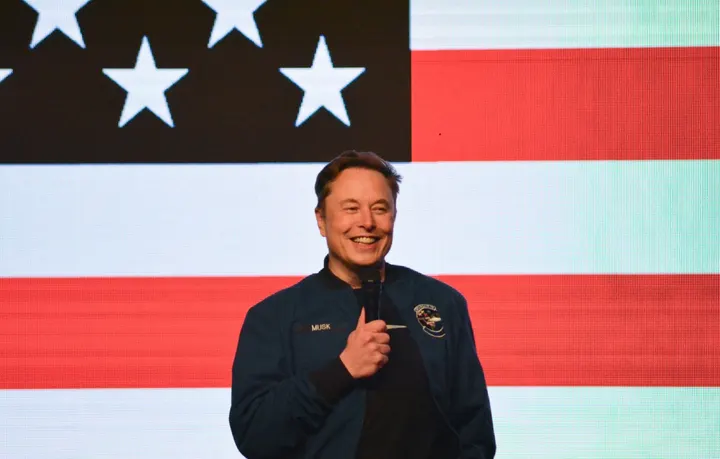
On the latest episode of TechCrunch’s Equity podcast, Kirsten Korosec, Sean O’Kane, and I discussed what the midterms mean for the tech industry. Sean kicked it off by noting that Elon Musk “seems to have basically nothing out of donating half a billion dollars” to Republicans, while his companies are now headquartered “in a state that has, remarkably, turned about as blue as it could possibly turn.”
And Kirsten said that while data centers probably weren’t the main cause of the “blue wave,” they’ve become an “an increasingly grassroots issue, in part because of how hyperscalers and companies have gone about” getting their projects approved. And now, “we’re already seeing companies like OpenAI all of a sudden go, ‘Actually, we can change our policies.’”
Keep reading for a preview of our conversation, edited for length and clarity.
Sean O’Kane: First off, let’s talk about the fact that one of the biggest data center builders was also the largest donor to the Republican Party. Elon Musk seems to have gotten basically nothing out of donating half a billion dollars — maybe even more, by the time we see the final count — and in fact is now sitting there with all of his businesses in a state that has, remarkably, turned about as blue as it could possibly turn for the first time in a very long time, if ever.
That, I think, is the biggest thing hanging above a lot of this discussion. But, there were also a bunch of ballot measures up around the country that would have paved the way for data centers to get built faster. Almost all of them got shot down, or voted against. [Actually, many of the ballot measures would have imposed restrictions or moratoriums on data centers, and almost all of those measures passed.]
With [Democrats] in power, there is a consensus view, at least in the tech world, that this is going to mean we have a lot of roadblocks ahead for data centers, especially in places like Texas, where [you have] folks like the governor-elect [Gina] Hinojosa, who has spoken pretty openly about this being a campaign promise and something that she wants to focus on once she takes power, now that she’s beaten Greg Abbott.
It’s the thing that I think the tech world is maybe a little too focused on. I’m curious what you guys think about that.
Anthony Ha: I don’t necessarily think that they’re too focused on it, but I understand why it would feel a little bit disproportionate — the data center ballot measures, certainly there were a number of them, but it wasn’t something that was on the ballot everywhere.
And in different races, the dynamic might have been a bit different, but there was this undercurrent and sense that it seems to be an issue that reaches across the country, that is bipartisan in a lot of ways, but that the Democrats seem to have been more effective at harnessing that energy. And of course, there’s all kinds of reasons why the Democrats did so well on Tuesday, but it does seem like anti-AI and especially anti-data center sentiment was a big part of it. That seems like a pretty potent political force.
The next two years, [and] potentially beyond that, are going to be more difficult for tech companies in general, and hyperscalers, data center companies in particular. I also imagine that they have to be a little bit worried about: Is this going to continue to be an issue, not just with the people who got elected this year, but potentially in 2028 and beyond?
Kirsten Korosec: Absolutely. I don’t think that the data center issue is what brought everyone to the polls and led to the quote-unquote “blue wave.” However, I will say that data centers have been an increasingly grassroots issue, in part because of how hyperscalers and companies have gone about getting these data centers [approved] — very secretive, oftentimes requiring NDAs of a elected officials or appointed officials, not sharing information about the scale of a project in very environmentally sensitive areas, including in the Southwest, where there’s very much a water scarcity issue.
So I think that a lot of folks — Republicans, independents, and Democrats — all saw this as wrong. They were motivated by it, but I don’t think it was a singular issue.
Now, here’s the interesting thing. There was a lot of waving of hands about how [AI companies] can’t possibly operate under any other circumstances. And we’re already seeing companies like OpenAI all of a sudden go, “Actually, we can change our policies.” They just released what they call a compute campus policy blueprint. And guess what? They’re not going to require NDAs anymore. They’re going to share their plans and supposedly operate in less secrecy.
I think what this shows is that when you put up either a regulatory certainty in the marketplace, or at least signals of going in that direction, then corporations will respond. If you don’t do that, they will not necessarily do the thing that we hope that they will do.
Anthony: One thing I want to emphasize is that they’re calling it this [their] “compute campus policy.” And part of what that’s doing, beyond laying out these policy changes, is also an attempt to rebrand data centers, because they have become such a toxic phrase. So they’re not data centers anymore, they are compute campuses, and I’m curious, whether either of you think that’ll take.
Sean: I mean, this is ridiculous. Come on. It’s not going to change anything. It’s going to cause them more effort. For a company that likes to say that it’s no longer focused on side quests, OpenAI still loves to go in different directions a lot. And this is just the latest kind of thing where it’s just like: Why are you spending time on this at all? It doesn’t really seem like it’s going to move the needle.
Kirsten: I have a great idea for OpenAI. Because in the spirit of making threatening things seem cute, they should 100% create a compute campuses avatar, [a] cutesy thing, and then just present that instead of a power-, energy-sucking, water-sucking data center.
Anthony: And if these are just lovely compute campuses, they should just build their own offices there or work next door, see how that works out for them.
Something else that I’m wondering about is, to what extent the election is maybe the second part of a one-two punch. [We’ve just seen] a big shift in how Wall Street is reacting to a lot of these hyperscalers and AI companies and this sense that [investors] are not excited about the idea that they should be spending all this money building new data centers, spending all this money on compute. And so there’s a financial incentive not to build all these data centers.
I’m very curious how that’s going to play out. [From a regulatory standpoint,] it’s probably going to be harder to build data centers. Wall Street is probably not going to reward you for building data centers. But at the same time, to get to the scale that they want to get to, they are probably going to need to build data centers somewhere.